PART 3
Then came the sentence that changed everything.
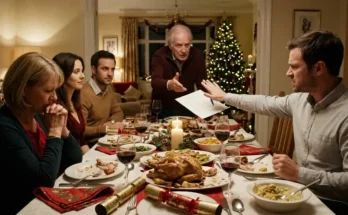
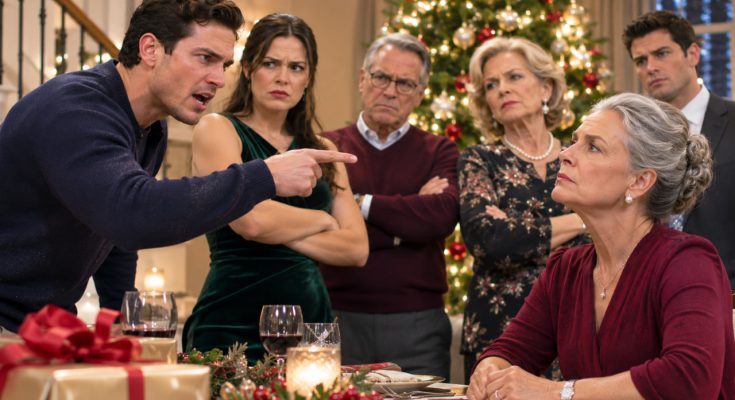
“Plus, the idiot agreed to pay for the catering, so I don’t have to lift a finger.”
I listened to it once more while the little typing indicators appeared and disappeared.
Nobody knew what to say.
Then Aunt Clara responded.
“Is that really what you said, Margaret?”
My mother immediately began typing.
“That’s completely out of context. Julian misunderstood what I meant.”
Richard jumped in.
“Why would you send private conversations to everyone? This is between you and Mom.”
I almost smiled.
Between me and Mom?
Apparently, it had been perfectly acceptable to discuss my money, my time, and my Christmas plans in front of the entire family.
But the moment I showed everyone what had actually happened, suddenly privacy mattered.
I typed one sentence.
“Richard, please explain why you authorized $2,500 in additional purchases using my card.”
He read it.
No answer.
I sent another message.
“Mom, please explain why you told everyone I was responsible for babysitting ten children without asking me.”
Nothing.
Then my father finally appeared.
“Julian, this is not the way to handle family problems.”
I stared at those words for a long time.
Not because they surprised me.
Because they sounded exactly like every other conversation I’d had with him over the past thirteen years.
Whenever Richard did something wrong, Dad wanted peace.
Whenever Mom crossed a boundary, Dad wanted understanding.
Whenever I complained, Dad wanted me to be mature.
I had spent most of my life being mature enough to absorb everyone else’s bad behavior.
I was finished.
I typed:
“Dad, I agree. Family problems should be handled honestly. That’s why I finally told everyone the truth.”
Then I put my phone down.
Naomi opened the cabin door behind me.
“Everything okay?”
I nodded.
“For the first time in a long time, I think it might be.”
She handed me a mug of hot chocolate.
“Then come inside. Your dinner is getting cold.”
I followed her.
But back in my parents’ house, Christmas Eve was apparently getting worse by the minute.
At 6:18 p.m., my phone lit up again.
This time, it was Aunt Clara calling.
I considered ignoring it.
Then I remembered that she had always been one of the few relatives who occasionally asked how I was doing without immediately asking for something.
I answered.
“Julian?”
“Hey, Aunt Clara.”
Her voice was quieter than usual.
“I’m standing in your mother’s kitchen.”
“Okay.”
“Your mother is crying. Richard is arguing with your father. And your uncle Mike just showed me the invoice.”
I leaned against the cabin counter.
“What do you want me to say?”
“Nothing. I just want to understand something.”
“What’s that?”
“Did you really pay for all the children’s babysitting every Saturday? And the vacations your brother took?”
I closed my eyes.
“No, Aunt Clara. I didn’t pay for the vacations. I just watched the children while they went.”
There was a pause.
“And the catering?”
“I agreed to pay for the original food. I never authorized the wine or gift baskets.”
She sighed.
“Your mother told everyone you offered to host Christmas.”
I laughed bitterly.
“Of course she did.”
“Julian, why didn’t you tell us?”
That question hurt more than I expected.
Because I had tried.
For years, I had tried.
But every time I explained something, my mother cried, Richard got angry, and my father told me not to make things difficult.
Eventually, silence became easier than defending myself.
“I thought it was normal,” I admitted. “I thought if I kept helping, eventually they’d appreciate me.”
Aunt Clara didn’t answer immediately.
Then she said something I hadn’t expected.
“Your grandmother would have been furious.”
I looked toward the window.
My grandmother had died when I was twenty-one. She was the only person in my family who had ever made me feel like I didn’t have to earn my place.
She used to tell me that kindness was a gift, not a debt.
I hadn’t thought about that sentence in years.
“She always liked you, Julian,” Aunt Clara continued. “And she would never have wanted you treated this way.”
I swallowed.
“Thank you.”
Before hanging up, she added one more thing.
“Don’t come back because they pressure you. Enjoy your Christmas.”
I promised I would.
But the evening wasn’t over.
At 7:02 p.m., Richard sent me a private message.
Richard: You have absolutely destroyed Mom’s Christmas.
I read it twice.
Then another message arrived.
Richard: Her friends are asking questions. My in-laws are furious. Do you have any idea how embarrassing this is?
I typed:
“Yes. I imagine it’s embarrassing when people discover the truth.”
He called immediately.
I answered.
“What?”
“Listen to me, Julian. You need to stop this.”
“Stop what?”
“Making Mom look like a criminal.”
“Did you authorize those purchases?”
“That’s not the point.”
“It seems like exactly the point.”
He exhaled sharply.
“I was going to pay you back.”
“When?”
“After Christmas.”
“With what money?”
He went silent.
I already knew the answer.
Richard had been spending money like it was something that would always appear when he needed it.
He and Monica had a beautiful house, two expensive cars, private school tuition, weekend trips, and memberships they barely used.
Yet somehow, whenever something unexpected happened, they called me.
And because I earned more than they did, everyone had decided I could afford to absorb the consequences.
“Julian, you’re being selfish,” Richard finally said.
That word almost made me laugh.
Selfish.
The same word they had used when I refused to babysit one Saturday because I had a work presentation.
The same word they used when I declined to pay for Richard’s car repair.
The same word they used whenever I tried to keep something for myself.
“Richard, I have one question.”
“What?”
“If I hadn’t canceled the catering, would you have told me that you added the wine and gift baskets?”
Silence.
“Would you?”
He finally muttered, “I didn’t think it was a big deal.”
“Then pay for it yourself.”
I hung up.
And for the first time, I blocked his number.
Not forever.
Not as revenge.
Just long enough to enjoy one evening without being dragged into another argument.
The next morning, Christmas Day, I woke up to sunlight spilling across the cabin floor.
Naomi’s father was making pancakes.
Her mother was arranging plates around the dining table.
Her younger sister was arguing with her husband about which Christmas movie to watch.
It was noisy, imperfect, and wonderfully ordinary.
Nobody had assigned me a task.
Nobody had handed me a list of errands.
Nobody had asked whether I could cover the cost of anything.
When Naomi’s father noticed me standing in the doorway, he smiled.
“Morning, Julian. You like pancakes?”
“Absolutely.”
“Good. Sit down. You’re family today.”
I stopped.
Those three words landed somewhere deep inside me.
Family today.
Not because I paid.
Not because I babysat.
Not because I was useful.
Simply because I was there.
I sat down and accepted a plate.
For a moment, I had to look away because my eyes were burning.
Naomi noticed but didn’t embarrass me.
She just placed another pancake on my plate.
“Eat,” she whispered.
And I did.
For the first time in thirteen years, Christmas didn’t feel like an obligation.
It felt like a holiday.
But back home, my family was beginning to realize that canceling one catering order had only been the beginning.
At 10:36 a.m., I received an email from my mother.
The subject line read:
WE NEED TO TALK ABOUT WHAT YOU DID.
I almost deleted it.
Instead, curiosity got the better of me.
I opened it.
The message was three paragraphs long.
My mother said she hadn’t slept. She said the family was humiliated. She said Aunt Clara had questioned her in front of everyone.
Then she wrote:
“Your father and I have always sacrificed for you boys. We never expected you to repay us, but we did expect gratitude. Richard has a family and real responsibilities. You have a comfortable life and plenty of money. I don’t understand why you would choose to hurt your own mother over something so small.”
I read that paragraph several times.
Richard had real responsibilities.
I had money.
Therefore, I owed them.
It was amazing how clearly my mother could describe everyone else’s obligations while refusing to acknowledge mine.
I closed the email.
Then I opened my banking application.
I looked at the recurring transfers I had set up over the years.
The $300 monthly payment toward my parents’ utilities.
The $200 I regularly sent for groceries.
The occasional $500 transfers whenever my mother claimed there was an unexpected household expense.
I added everything up.
Then I opened another spreadsheet.
Because I was a data analyst, I had a habit of tracking almost everything.
I created a new tab and named it:
FAMILY FINANCIAL SUPPORT — 13 YEARS.
I began entering what I could verify.
The Saturday babysitting wasn’t included because I hadn’t charged them for it.
The restaurant bills weren’t included unless I had receipts.
The holidays, emergency payments, utility contributions, and household expenses went into separate categories.
After several hours, I stared at the final number.
$48,760.
I leaned back in my chair.
Forty-eight thousand seven hundred and sixty dollars.
And that was only the money I could document.
I wasn’t expecting a thank-you.
I wasn’t expecting repayment.
But suddenly, I understood something.
My family hadn’t been asking for occasional help.
They had built their financial comfort around my willingness to say yes.
And I had allowed it because I wanted to feel needed.
That was the part I had to accept.
I couldn’t change what they had done.
But I could change what happened next.
I closed the spreadsheet, made a backup, and turned off every recurring transfer.
Then I opened my calendar.
The following Saturday was the twenty-eighth.
For the first time in years, I had no children scheduled to arrive at nine in the morning.
I smiled.
Then my phone rang.
It was Monica.
Richard’s wife.
I stared at her name for a moment before answering.
“Hello?”
“Julian?”
“Hi, Monica.”
She sounded nervous.
“I know you probably don’t want to hear from me.”
“What’s going on?”
She took a breath.
“Richard told me what happened with the catering.”
I waited.
Then she said something that made me sit up straight.
“He also told me you canceled everything because you were angry that we had asked you to babysit.”
I looked out at the mountains.
“That’s not what happened.”
“I know.”
Her voice cracked slightly.
“I saw the invoice.”
I didn’t respond.
“Julian, I didn’t know he had added the wine and gift baskets to your card. I swear I didn’t.”
I believed she might not have known.
But there was something else.
She continued.
“I also didn’t know you were planning to spend Christmas upstairs with all the children. Richard told me you had offered.”
I closed my eyes.
“Monica, I never offered.”
“I know that now.”
There was a long silence.
Then she asked:
“Can I tell you something?”
“Go ahead.”
“Richard is furious with you. But he isn’t furious because you canceled the food.”
“What do you mean?”
“He told me this morning that if you stop helping us, we’re going to have a serious problem.”
I frowned.
“Financially?”
“Yes.”
She hesitated.
“Julian, there’s something you should know about the money Richard has been spending.”
I sat down.
“What money?”
“The money he borrowed.”
“From whom?”
She lowered her voice.
“Your parents.”
I felt my stomach tighten.
“How much?”
“I don’t know exactly. But it’s more than I thought. And yesterday, when everyone was asking about the catering, your father mentioned something about a loan Richard was supposed to repay before the end of the year.”
I stared at the phone.
“What does that have to do with me?”
Monica didn’t answer immediately.
Then she said:
“Richard told me your parents were going to ask you to help him.”
I felt a cold sensation move through my chest.
“Help him how?”
She whispered:
“By paying off his debt.”
For several seconds, I couldn’t speak.
Then I asked the only question that mattered.
“How much does he owe?”
Monica exhaled.
“Julian, I think it’s around thirty thousand dollars.”
I looked at the spreadsheet still open on my laptop.
Forty-eight thousand seven hundred and sixty dollars.
And now another thirty thousand?
“Did Richard tell you I agreed to pay it?”
“No.”
“Did my parents?”
“Not directly.”
She paused.
“But I heard your mother telling your father that Christmas would be the perfect opportunity to talk to you. She said you’d be in a good mood after everyone had dinner, and you wouldn’t refuse in front of the family.”
I slowly stood up.
Suddenly, the missing catering order made sense.
The expensive wine.
The gift baskets.
The twenty-five guests.
The entire Christmas gathering had been designed to impress people.
And apparently, it had also been the perfect setting for another financial request.
I thanked Monica for telling me.
Before she hung up, she said:
“Julian, I’m sorry.”
I didn’t know whether she was apologizing for herself, Richard, or the entire family.
But I accepted the apology.
Then I opened my laptop again.
I looked at the spreadsheet.
At the recurring payments.
At the years of weekends I had surrendered.
And at the $30,000 my family had apparently planned to ask me for without even telling me beforehand.
I added a new note beneath the final total.
No more automatic yes.
Then my phone buzzed.
A message from Aunt Clara.
“Julian, your father wants to meet with you. He says there’s something important you need to know about your grandmother’s estate.”
I stopped moving.
My grandmother’s estate?
She had died eight years earlier.
As far as I knew, everything had been settled.
But Aunt Clara sent another message before I could respond.
“There’s something your mother never told you.”
And then came the sentence that made my blood run cold.
“Your grandmother left something specifically for you, Julian. And I don’t think you ever received it.”
I stared at the screen.
For the first time since Christmas Eve, I wasn’t thinking about Richard, the catering, or the money.
I was thinking about my grandmother’s red scarf.
The one I had held on New Year’s Eve when I was sixteen.
The one she had wrapped around my shoulders before telling me I deserved a life of my own.
And suddenly, I wondered what else my family had taken from me while I was too busy trying to keep everyone happy.
Because apparently, the catering disaster wasn’t the only secret my family had been hiding.