PART 4
I stared at the document in Leonard Pike’s office.
My name was printed beneath a signature that looked almost identical to mine.
For several seconds, I couldn’t move.
The document was dated six weeks earlier. It referenced my lake property, described its estimated value, and included a statement indicating that I had agreed to allow the property to be considered as security for a financial arrangement.
At the bottom was a signature.
Miriam Carter.
My name.
My handwriting.
Or something that had been made to look like it.
“Leonard,” I whispered, “I didn’t sign this.”
“I know you didn’t authorize it, based on what you’ve told me. But we need to establish how this document was submitted and whether it was actually relied upon.”
Naomi leaned forward.
“Can someone really use another person’s property like this?”
“Not lawfully without the required authority and valid documentation,” Leonard replied. “But that doesn’t mean someone won’t attempt it.”
I looked at the document again.
The signature was convincing.
The capital M had the same tall first stroke.
The final letters leaned slightly to the right. Even the little curve beneath my surname looked familiar.
Then I noticed something.
“Leonard, look here.”
I pointed toward the signature.
“What’s that?”
He adjusted his glasses.
“What?”
“The date.”
He looked closer.
I swallowed.
“That was the week I was hospitalized for my pre-surgery tests. I was taking medication, and Naomi drove me everywhere. I wasn’t even near the bank.”
Leonard nodded slowly.
“That’s important.”
Naomi looked furious.
“Did they think nobody would check?”
I didn’t answer.
Because another question had entered my mind.
How had they obtained enough information about my property to prepare the application?
And why had they been so confident that I would eventually give them money?
Leonard placed the document inside a clear folder.
“I recommend that we preserve every original record, request the lender’s complete application file through the appropriate process, and have the signature examined by a qualified forensic document examiner.
We should also notify the relevant financial institution that you dispute the authorization.”
I nodded.
“Do whatever needs to be done.”
Then I asked him something.
“Have they actually borrowed money?”
He looked at the next page.
“The application appears to have been submitted, but we have not yet confirmed whether any funds were released.”
My heart sank.
“Then we need to find out.”
That afternoon, Leonard helped me contact the financial institution.
I explained that I had not signed the authorization, had not approved the use of my property, and had never given Celeste or Derek permission to represent me in a financial transaction.
The representative recorded my dispute and provided instructions for submitting a formal identity and document-fraud report.
I also arranged for an independent title search and a review of the property’s public records.
Nothing could be changed, transferred, or pledged through my cooperation without my knowledge.
But I wanted to be certain that nothing had already happened.
When we finished, Naomi drove me home.
For most of the journey, neither of us spoke.
Finally, I asked her something.
“Do you think my daughter could have done this?”
Naomi kept her eyes on the road.
“I don’t know what she knew or what Derek told her.”
“She signed the document too.”
“Then she needs to explain why.”
I stared through the passenger window.
I remembered Celeste at six years old, sitting beside Samuel while he taught her how to tie a fishing knot.
I remembered her first day of school.
Her wedding.
The birth of Theo.
The day she brought Wren home from the hospital.
How could the little girl who once cried because she accidentally stepped on a ladybug become a woman whose decisions could hurt her own mother this deeply?
Then I remembered something Samuel had told me years earlier.
People don’t always change suddenly, Miriam. Sometimes they simply become more comfortable showing you who they have become.
I closed my eyes.
Perhaps I had been looking away for too long.
The next morning, Celeste called.
I watched her name appear on my screen.
For a moment, I considered letting it ring.
But I needed answers.
I answered.
“Hello, Celeste.”
“Mom, finally.”
Her voice sounded irritated.
“Where have you been? Derek and I have been trying to reach you.”
I almost laughed.
“Really?”
“Yes. We need to discuss something.”
“I think we do.”
There was a pause.
“Did you talk to Leonard?”
I felt my stomach tighten.
“Why?”
“Because he contacted someone about our financial application.”
I closed my eyes.
There it was.
Not concern about my health.
Not an apology.
Not a question about whether I could walk without assistance.
She was calling because she had learned that I knew.
“Celeste, did you sign a document using my name?”
Silence.
Then she said, “It’s not what you think.”
“Did you sign it?”
“Mom, Derek was trying to help us.”
“That wasn’t my question.”
She sighed.
“Everything was temporary.”
I gripped the phone.
“What was temporary?”
“The loan.”
“What loan?”
“Mom, please. You’re making this sound like a crime.”
“Then explain it to me.”
She didn’t answer.
I continued.
“I never gave you permission to use my property. I never signed that document. Why is my name on it?”
“Because Derek thought you would agree.”
I felt my blood run cold.
“He thought I would agree?”
“Yes! We were going to explain everything.”
“When?”
“After everything was settled.”
I stared at the kitchen wall.
“After you borrowed money against my house?”
“It’s not your house that we wanted to take away!”
“Then what exactly did you want to do with it?”
She began crying.
“Mom, we’re in trouble.”
I remained silent.
“Derek made an investment. It was supposed to bring in a lot of money. He borrowed from a private lender, and now everything has gone wrong.”
“How much does he owe?”
“More than we can afford.”
“How much, Celeste?”
“One hundred and eighty thousand dollars.”
I felt the room tilt.
I lowered myself carefully into a chair.
“One hundred and eighty thousand?”
“Yes.”
“And you thought you could solve that by using my lake property?”
“We were going to refinance everything. We weren’t going to lose your house.”
“Did you think about asking me?”
She started crying harder.
“Mom, you always helped us before!”
I closed my eyes.
“Yes, sweetheart. I did.”
“So why couldn’t you just help us this time?”
I took a slow breath.
“Because this time you didn’t ask for help.
You tried to use something that belonged to me without my permission.”
She went quiet.
Then she said something I will never forget.
“Derek told me you would eventually understand. He said the lake house was going to be mine anyway.”
I felt something inside me break.
“Celeste, your father and I never promised you that property.”
“But you always said it would stay in the family!”
“It will. But staying in the family doesn’t mean you own it before I die.”
She sniffled.
“You’re choosing money over your daughter.”
“No,” I replied quietly. “I’m choosing the truth over another lie.”
She hung up.My Daughter Told My 6-Year-Old Grandson
For the next three days, I barely slept.
I wasn’t frightened of losing the lake house.
I was frightened by how easily my daughter had accepted the idea that she could make decisions about my property without asking me.
Leonard continued investigating.
The financial institution confirmed that the application had been submitted with supporting documents, including the disputed authorization.
However, no loan secured against my property had been completed.
That was a relief.
But the investigation uncovered something else.
The lender had not been told the full truth about the ownership arrangement.
Derek had represented that he was expecting to receive the property through an inheritance arrangement and that my consent had been obtained.
The application also included financial projections that did not match the actual records of his business.
Leonard advised me not to contact Derek directly about the evidence.
Instead, he helped me submit the necessary formal complaints and preserve the records.
The signature was sent for independent examination.
Meanwhile, the bank’s investigation continued.
I wanted the truth.
Not revenge.
The truth.
A week later, I received a call from Eleanor.
Her voice was trembling.
“Miriam, I think I need to tell you something else.”
I sat down.
“What happened?”
“I found some papers in Derek’s old briefcase.”
My heart began beating faster.
“What kind of papers?”
“Financial statements. Messages. A letter from someone who had lent him money.”
“Did you read them?”
“Only because I was trying to understand why he was asking me for forty thousand dollars.”
She took a breath.
“Miriam, I think the investment wasn’t what he told everyone.”
“What do you mean?”
“He didn’t invest the money in a legitimate business opportunity. At least, that’s not what these papers suggest.”
I remained silent.
Eleanor continued.
“There are several transfers to different accounts. Some payments appear to have been used to cover earlier debts. There are also messages from people demanding repayment.”
I rubbed my forehead.
“Does Celeste know?”
“I don’t know how much she knows. But her name appears on some of the documents.”
I felt sick.
“Thank you for telling me.”
Eleanor began crying.
“I’m so sorry. I never wanted our families to end up like this.”
“Neither did I.”
After the call, I sat quietly.
I had spent so many years believing that Celeste and Derek were simply struggling financially.
Now I wondered how many of those emergencies had been connected to the same problem.
How many times had Samuel and I paid one bill while another debt quietly grew?
How many times had our help allowed them to avoid facing the consequences of their decisions?
I opened the cedar box again.
This time, I didn’t see the $171,640 as a list of sacrifices.
I saw a history of decisions.
Some were generous.
Some were unnecessary.
Some should have ended years earlier.
And I finally understood that loving my daughter did not mean I had to keep funding a life she refused to manage responsibly.
Three weeks after my surgery, Leonard called.
“The preliminary document examination is complete.”
I sat down.
“And?”
“The examiner identified several significant inconsistencies between your known handwriting and the disputed signature. The report does not establish who created it, but it supports your position that the document requires further investigation.”
I closed my eyes.
“Thank you.”
“There is also an update from the financial institution.”
I waited.
“The application was not approved. Your property was not used as security, and the institution has placed the disputed documents under review.”
I released a breath I hadn’t realized I was holding.
“Does that mean the lake house is safe?”
“Based on the records we’ve checked, there is no completed transaction against it. We’ll continue monitoring the title records.”
I thanked him.
Then Leonard said something else.
“There’s one more thing, Miriam.”
“What?”
“Celeste has asked whether she can meet with you.”
My heart tightened.
“What did she say?”
“She wants to explain everything.”
I looked toward the window.
For weeks, I had wanted that conversation.
But now that it was possible, I wasn’t sure I was ready.
“Tell her I will meet her,” I said.
“Under what conditions?”
I thought for a moment.
“She comes alone. No Derek. No arguments about money. And I want the conversation to be honest.”
Leonard agreed to communicate those conditions.
Celeste arrived on a Thursday afternoon.
I had been sitting in the living room with a blanket over my legs.
Naomi was in the kitchen.
When the doorbell rang, my heart began beating faster.
I walked slowly toward the entrance.
Celeste stood on the porch.
She looked thinner.
Her hair was pulled back into a messy ponytail, and there were dark circles beneath her eyes.
For a moment, I saw my little girl.
Then I remembered the messages.
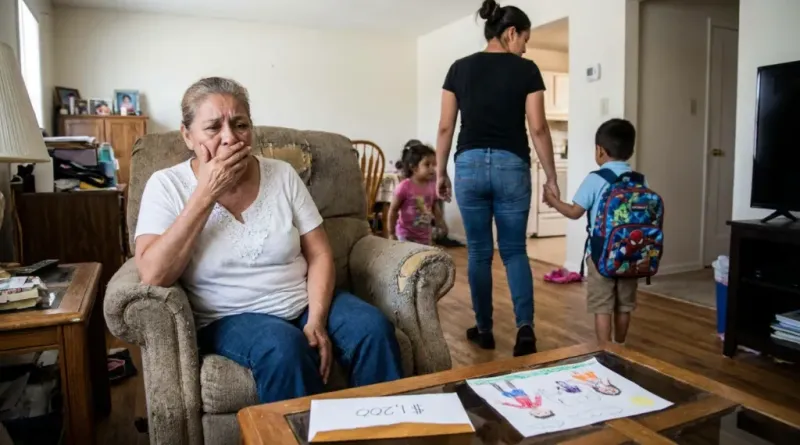
The returned $1,200.
The photographs of my belongings in a cardboard box.
The letter suspending contact with my grandchildren.
And the disputed signature.
“Hi, Mom.”
“Hello, Celeste.”
She looked past me.
“Can I come in?”
I stepped aside.
She entered and sat on the sofa.
I lowered myself carefully into the chair opposite her.
For several seconds, neither of us spoke.
Then she started crying.
“Mom, I’m sorry.”
I looked at her.
“Which part?”
She wiped her face.
“All of it.”
I waited.
“I shouldn’t have told Theo that you didn’t want him. I shouldn’t have sent your things back. I shouldn’t have returned the money like that.”
I swallowed.
“Do you understand what that did to him?”
She nodded.
“I know.”
“No, Celeste. I don’t think you do.”
She looked down.
“He thinks he did something wrong.