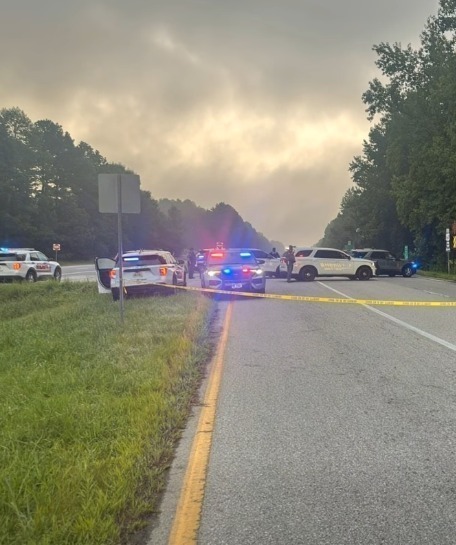
In a rapidly escalating development that has brought daily life to a near standstill, law enforcement officials are issuing an urgent and unequivocal warning: stay away from the affected zones. What began as a seemingly contained situation has expanded into a complex, high-risk operation, prompting authorities to take extraordinary measures to secure the area and protect the public. Transit systems have been disrupted, roads sealed, and entire sections of the community placed under tight restriction as officials work to contain what is being described as an active and potentially life-threatening situation.
The scale of the response is impossible to ignore. Emergency services have mobilized with remarkable speed and coordination, establishing a wide, multi-layered perimeter designed to keep civilians at a safe distance. This is not a routine precaution. Authorities have made it clear that the restrictions are rooted in real and immediate concerns, emphasizing that even a brief intrusion into the restricted zone could put lives at risk. Every entry point is being monitored, and only authorized personnel are permitted to pass through the heavily guarded checkpoints.
For residents nearby, the transformation has been both sudden and unsettling. Streets that once carried the steady rhythm of daily activity are now eerily quiet, interrupted only by the sound of sirens and the hum of emergency vehicles. The visual landscape has shifted dramatically. Flashing red and blue lights reflect off windows and pavement, casting an almost surreal glow over the area. Rows of patrol cars line the streets, backed by armored vehicles, tactical units, and mobile command centers strategically positioned to respond at a moment’s notice.