PART 3
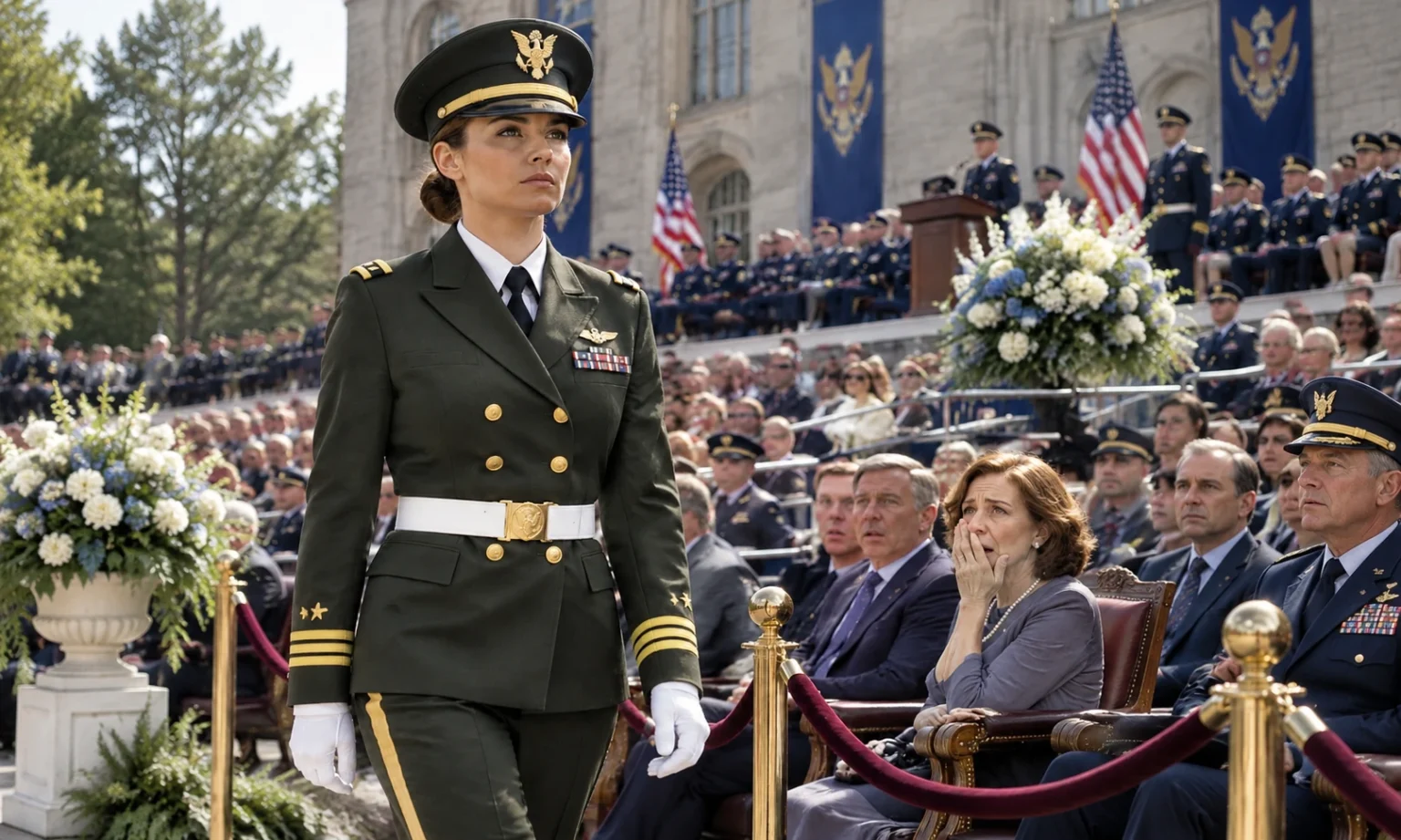
“Congratulations, Lieutenant Lawson. I’ve read your research.”
“You have?”
“Twice.”
Dad looked stunned. Sandra had gone still, and Brooke had stopped checking her phone. I had imagined enjoying such a moment, but instead I felt exhausted by years of wondering what accomplishment would finally make them proud.
My work had mattered before they noticed it.
After the ceremony, my classmate Daniel Price greeted me with teasing congratulations. Among friends who understood the work behind the awards, I finally relaxed.
Then Brooke approached alone and offered back the invitation.
“Dad said you had other passes and didn’t care who used this one. I didn’t know.”
At twenty-four, she was two years older than me, but she looked unusually uncertain.
“I told him the opposite,” I said.
“I wouldn’t have taken it if I’d known.”
“I want to believe that.”
She accepted the answer without arguing and apologized. This time, I believed she meant it.
An officer then escorted me to the superintendent’s reception room. Over coffee and sandwiches, General Cole explained that the fellowship’s intensive program included nine months in Washington, graduate coursework, and strategic planning assignments before my regular branch training.
I would report in six weeks and had forty-eight hours to accept.
“I can decline?”
“Of course,” General Grant said. “Prestigious opportunities are still choices.”
General Cole leaned forward.
“People will spend your career telling you what you should want. Learn to decide what you actually want.”
Later, General Grant quietly checked on my arm and told me my family wanted to speak.
“You don’t owe anyone a reconciliation because it’s graduation day.”
He admitted missing his own daughter’s high-school graduation twenty-two years earlier for an assignment he had convinced himself required him.
“She made me earn her trust again,” he said. “It took time.”
The Box My Mother Left
Forty minutes later, I met my family in a visitor lounge. I wanted to speak honestly rather than spend the day avoiding them.
Dad congratulated me. Sandra said they had never known I was valedictorian.
“I told you three weeks ago that I was giving the graduation address.”
Brooke remembered the dinner. Dad had been answering emails, Sandra had been discussing a clothing sponsorship, and my announcement had quickly disappeared beneath photographs from Brooke’s latest campaign.
Now Dad asked about Washington, my training, and my work. His attention saddened me because he could have asked those questions at any point during the previous four years.
“That’s remarkable,” he said when I finished.
“Would you have thought so yesterday?”
He couldn’t answer.
Then he described the morning as something that had “gotten out of hand.” I refused that explanation until he acknowledged giving away my ticket, stopping me, and pushing me.
“I’m sorry,” he finally said.
“I appreciate that. It doesn’t mean we’re fine.”
When I asked why he had been angry, he struggled to explain. Sandra touched his arm, and Brooke urged him to tell me the truth.
Eventually, Dad spoke about my mother, Julia, who had died twelve years earlier.
“She wanted to serve. She was accepted here.”
I stared at him. I remembered a chemistry teacher who encouraged me to climb trees, read widely, and learn practical skills. I had never known she once wanted a military career.
Dad explained that her father became ill and she stayed home, eventually attending State. During her own illness years later, she spoke about chances she wished she had taken—travel, graduate school, and service.
She had also said she loved her family. Dad had heard only that he might have helped her settle for less.
“When you chose the academy,” he admitted, “it felt like losing her again.”
Understanding his fear did not excuse what he had done.
“You could have told me. You could have been proud.”
“I was.”
“Then you hid it so completely that it made no difference.”
Brooke interrupted. Three months earlier, while searching Dad’s office for an insurance document, she had found a wooden box. She showed me a photograph of its lid.
For Emma.
I recognized my mother’s handwriting immediately.
Dad admitted he had kept it since her death. The note on top said it was for when I had to choose the life I wanted.
“You kept it through my application, my acceptance, all those decisions?”
He said he had always believed the timing wasn’t right.
“I want it today.”
That evening, I skipped Sandra’s family dinner and ate with Daniel and other classmates. We laughed about failed exercises and old mistakes, enjoying two hours without discussing rankings or prestige.
Just before nine, I returned to the academy guest lodging and found Dad alone in the lobby with the box.
He said he had opened the outer lid once but never the sealed envelopes. My aunt Natalie, Mom’s younger sister in Oregon, had given it to him after the funeral and assumed he passed it on.
“I told myself I was protecting you from your mother’s unfinished dreams,” he admitted. “Now I think I was protecting myself.”